
Q&A[2026-11-24]
How Analytics Teams Catch Data Quality Problems Earlier

Data quality problems can distort decisions long before they appear in reports. This article shares practical ways analytics teams spot warning signs, verify inputs, and stop flawed data at its source. Insights from field experts show how to weigh defects, monitor key signals, and protect critical business outcomes.
§ How this was made
The perspectives in this article were written by the named contributors and submitted through Connectively. Connectively's automated system selected them and used AI to write the headline, introduction, section headings, summary sections, and illustration, and to make minor edits for clarity. Articles are assembled and published automatically. Report errors to corrections@connectively.us. How we make our content
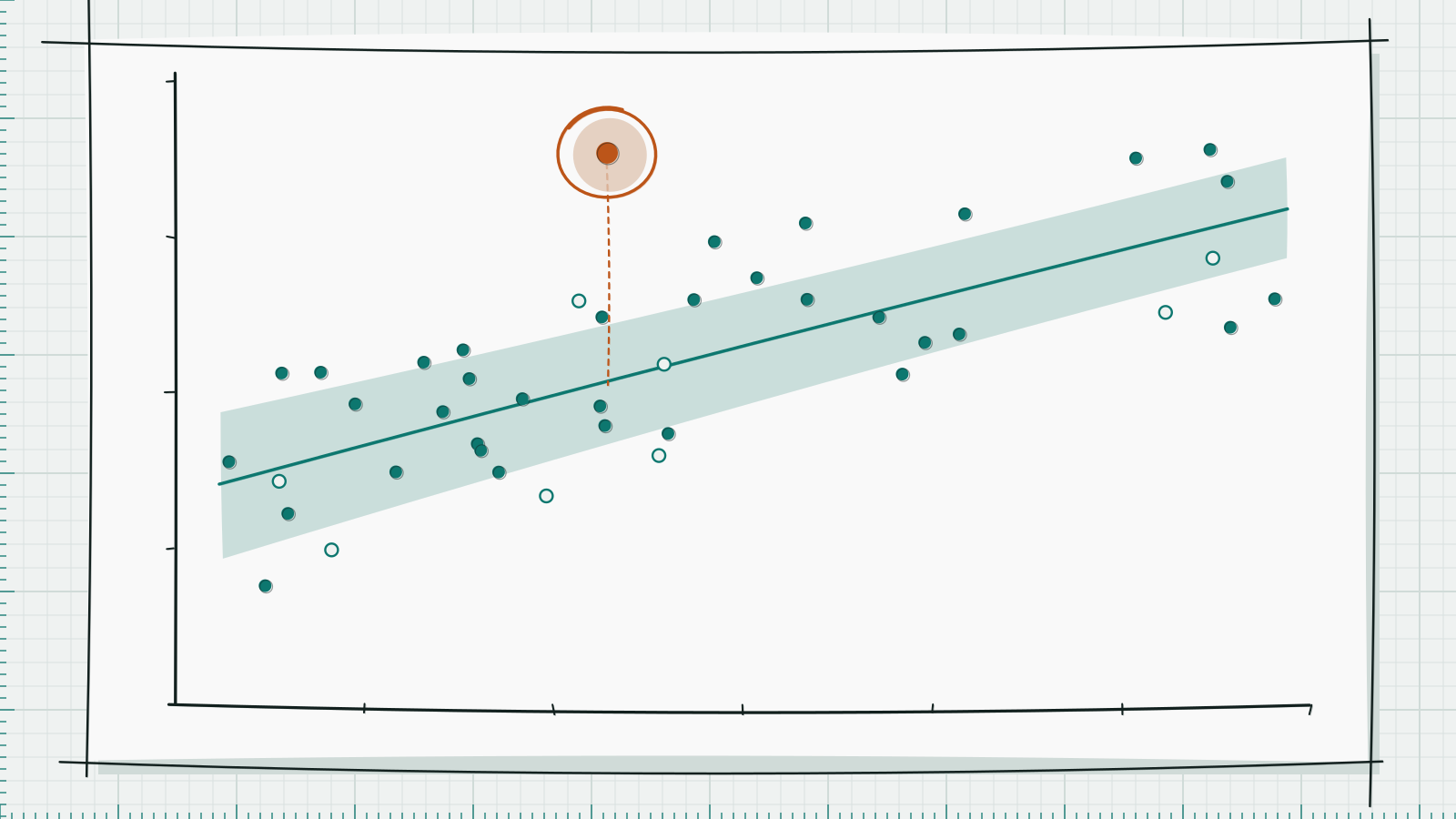
Illustration generated with AI
 SD
 OK
 SB
 KK
 CA
 KS
 HC
 Jens HagelFounder & Owner, kjello
Reveal Check Blind Spots
As founder of an IT firm in Hamburg I run our own websites, and they taught me that a check only finds what it was built to look for. Our nightly link checker hunted for dead links and missed about 590 links that had never become links at all: raw formatting text that visitors could see, some of it in Google snippets. Before I trust any quality check now, I ask which kind of error it could never see. A dead link is a different problem from a link that never existed, and each needs its own test. Jens Hagel, Founder & Owner, kjello (Hamburg, Germany)
Shivanshu DixitSEO ConsultantWeight Defects by Decision Stakes
I prioritize data quality issues by decision impact, not by how messy the data looks. The question I ask is simple: if this number is wrong, which decision changes, and what does that mistake cost? Issues that sit close to high-stakes or high-frequency decisions go first. Everything else gets documented and monitored.
In practice, I score each issue on three factors: how much money or risk rides on the decision it feeds, how often that data is used, and how fixable the problem is. A 2% duplication rate in a marketing contact list is an annoyance. A 2% error in revenue recognition or inventory counts can distort forecasts, so the second one jumps the queue. Perfection is rarely the goal. Most business decisions tolerate some noise, but they don't tolerate systematic bias, so I treat a consistent skew (say, one region's sales always logged a day late) as more serious than random errors that average out.
I also separate "fix it" from "flag it." When imperfect data has to be used immediately, the honest move is to publish it with a visible caveat, such as a confidence note or a known-gap label, so decision-makers know how much weight to give it. This keeps trust intact and keeps work moving.
The early warning practice that has paid off most is automated baseline monitoring on a small set of critical metrics. We track row counts, null rates, and week-over-week distribution shifts on the tables that feed executive dashboards, and alerts go to the analyst who owns that data. In one case, a sudden drop in order records from a single channel triggered an alert two days before a quarterly planning review. A upstream integration had silently changed a field format, and the records were being dropped rather than rejected. Without the alert, leadership would have read it as a demand decline and possibly cut spend on a healthy channel.
Two supporting habits help: a short pre-meeting sanity check on any figure going into a major decision, and a named owner for every critical dataset so problems don't fall between teams.
Orrin KlopperCEO, NetsuritClassify Flaws as Security Threats
Running an IT services company since 1995 means I've watched bad data quietly drive bad decisions more times than I'd like to admit. That history puts me in a decent position to answer this.
When clients come to us for IT audits and assessments, the first thing we do is identify which data flows are actually touching live decisions - things like access controls, compliance status, system performance. We prioritize fixing those first, not because the other gaps don't matter, but because imperfect data at a decision point is a different category of risk than imperfect data sitting in a report nobody reads.
The early warning practice that's caught real problems for us is transparent, consistent reporting tied to clear thresholds. When we implemented real-time alerting for clients, the value wasn't just speed - it was that anomalies surfaced before someone built a strategy on top of them. One healthcare client was making staffing assumptions based on system availability data that hadn't been cross-checked against actual incident logs. The mismatch only showed up because we had layered reporting catching the gap.
The honest principle underneath all of this: treat data quality like a security vulnerability. You classify it by impact, patch the highest-risk gaps first, and you don't wait for a breach to find out what was broken.
Scott BrownFounder, Focus Group PlacementWatch Respondent Signals Weekly
I prioritize data quality issues by asking one question: which flaw could change a decision someone is about to make? Cosmetic inconsistencies can wait, but anything that touches respondent authenticity, sample composition, or the metrics tied to spending gets fixed first. In our survey and focus group matching work, the early warning practice that has served us best is tracking a few simple leading indicators on a weekly basis, such as completion times, screener-pass rates, duplicate or suspicious sign-ups, and the mix of respondents by source. When one of those drifts from its baseline, even slightly, we pause and investigate before anyone leans on the numbers. That habit has caught bad traffic sources and low-quality respondent batches before they skewed results, and it works because the check takes minutes and the alternative is making a confident decision on contaminated data.
Kuldeep KundalFounder & CEO, CISINGate Inputs at Arrival
The importance of data quality issues should not be based on the technical work needed to solve the problems, but rather depend on the impact of business decisions they affect. Based on my experience in running large-scale digital transformation projects, I have developed a classification of data issues included into the three categories-obstacles of operations, risks of decision-making processes, and historic noise. First of all, we deal with the obstacles of operations because they actually stop the work of the company. This could be, for instance, mistakes in the ERP of the manufacturing enterprise or errors of the fintech billing platform. Secondly, we process data which is used for automated AI models as well as data for real-time client communications and interactions. If some data is important for the executive decision-making process or is linked to customer interaction, it must be correct in any case. Other problems include those connected with the reporting process that do not affect the long-term plans of the company.
We have developed an efficient system of early warnings which consists of the data validation gates which track statistical irregularities right at the point of ingestion. We define some thresholds for crucial metrics that include transaction volume or user interaction and if the incoming data fails to comply with the established thresholds, the process of analytics undergoes a halt. With the help of this strategy, we make sure that the incorrect data never gets to the platform of the decision maker.
Charvi AgrawalAI-native Marketing Coordinator, Qubit CapitalTrace Bounces to Departed Partners
We once spent most of 3 months cleaning every field in our investor list, even the spelling of fund names. Now we fix first whatever could send a founder to the wrong person. We keep that list for the founders we work with. A misspelled fund name never cost a founder anything. A partner who left the fund 2 months ago does. When an email bounces, every partner at that fund gets marked for a check by hand. Once the check marked a seed fund whose 2 partners had both left. That was a day before their names went to a founder.
Bounce checks may catch nothing beyond people leaving. The kind of startup a fund backs is the field that changes quietly. No fund emails you to say it has stopped writing seed cheques.
Kruno SulićFounder & SaaS Product Builder, ClipriseContrast Funnel Metrics Against Demand
When data is imperfect but the business still has to move, I prioritize fixes based on decision impact, not based on how ugly the dataset looks. In practice, my order is: which issue affects a high-frequency decision, which one can change revenue or spend, and which one is hardest to reverse if we get it wrong. A cosmetic dashboard mismatch can wait. A broken attribution field, conversion event, or pricing input that changes daily decisions goes to the top immediately.
A useful way to rank issues is with three questions: What decision uses this data? How often is that decision made? What is the cost of being wrong for a week? If the answer is paid acquisition budgets, subscription reporting, or funnel performance, that issue gets attention first because teams will act on it fast and repeatedly. If the downstream decision is low-stakes or easy to unwind, I treat it as secondary even if the data problem is obvious.
The early warning practice that has helped most is a small set of "decision guardrail" checks tied to key metrics, not just general data health. We watch a short list such as traffic by source, conversion rate by step, cost per acquisition, refund rate, and API event counts. Then we compare each metric against its recent baseline and against adjacent metrics that should move together. If signups jump 40% but trials, payments, or event logs do not, that is a warning that tracking broke before someone treats the spike as real demand.
That cross-check has saved us more than once. In one case, a sudden improvement in top-of-funnel numbers looked like a campaign win, but the downstream conversion pattern stayed flat. The mismatch pointed to an event issue rather than real performance. Catching that early prevented us from shifting budget based on a false signal.
My rule is simple: fix first what can cause the team to confidently make the wrong decision, and build alerts around the handful of metrics that actually trigger action.
Hasan Can SoygökFounder, RemotifyBalance Settlement Totals Daily
I prioritise data errors by the decisions they could distort, not how messy the dataset looks. In payment operations, mismatched settlement amounts matter more than a missing optional customer field. I'd use a daily exception report to compare transaction totals, settlement records and missing identifiers before reviewing revenue. If the figures don't reconcile, I'd flag the report as provisional and assign someone to investigate. The important habit is catching unreliable data before it reaches decision-makers, rather than quietly correcting mistakes afterwards.
 Vlad BodeaCo-Founder & Board Member, Bento
Observe Outcomes Post-Launch
I prioritize data quality issues by the potential impact on the decision, with closer attention when the consequences for people or the business are greater. An early-warning practice is to keep monitoring after a system is in use, rather than relying only on checks before launch. Comparing error rates, false positives, false negatives, and decision outcomes can reveal when real-world conditions are producing problems. That gives the team a chance to investigate and escalate an issue before relying on the affected results.
 Kyle BarnholtCEO & Co-founder, Trewup
Triage Errors Through Deadline Reach
We use decision deadlines as the first filter when setting priorities. Data flaws linked to a board review, forecast lock, customer settlement, or inventory commitment receive attention before defects with no urgent decision attached. The next filter is the potential impact of the error. We look for mistakes that affect multiple reports, involve several teams, or spread through copied assumptions.
Before raising an issue, we assess the possible direction of harm. An error that could overstate margin needs a different response. We then record what is known, what is assumed, and what remains uncertain. This helps leaders avoid treating early information as confirmed fact.
 Chirag KulkarniFounder & CEO, Taco
Benchmark Figures With Trusted History
We use a pre-meeting data check for metrics that may influence executive decisions. Before a major review, we check data freshness, volume, definitions, and unusual changes in the key metrics. We keep this review focused because checking every table can create false confidence without finding important issues. This helps us spend time on the information that matters most.
We also record the last reliable value beside the current one. This gives us a clear reference when new data looks unusually strong or weak. Once, an apparent improvement seemed worth celebrating, but our check revealed a change in the source's reporting schedule. We avoided mistaking delayed records for real demand and prevented a short-term issue from affecting future priorities.
 Pete FursethCOO, ORM Technologies
Heed Practitioner Doubt
We rank data problems by the size of the decision they touch, not by how wrong they are.
Most teams do the opposite. They sort by severity, fix the ugliest records first, and feel productive. A field that is blank on four thousand closed-lost records from two years ago looks terrible on a quality report and changes nothing. A single misaligned close date on an eight figure renewal inside the current quarter looks like nothing and moves the forecast.
So the first question is never how bad is this. It is which decision reads this field, and when.
In practice that means we map the handful of decisions a customer actually makes with the data. Where does the next dollar go. How many reps do we need and where. What do we tell the board this quarter closes at. Then we walk backwards from each one and only the fields on those paths get triaged first. Everything else goes on a list and waits.
The early warning that has caught the most is not a data check. It is disagreement. When the number we produce stops matching what the person closest to that part of the business believes, we stop and look, even when our number validates clean. That person is usually wrong about the cause and almost never wrong that something changed.
We missed one that taught us this. Revenue in a region looked healthy and the regional lead kept saying it did not feel right. The data passed every rule we had. What had changed was an upstream definition. Opportunities were being created at a different stage than before, so the same pipeline looked further along than it was. Nothing was broken. Everything was wrong.
A rule cannot catch that, because the records are valid. A person noticing the shape has changed can.
The practice I would hand to anyone: write down the five decisions your data is used for, and check the fields on those paths every week. Ignore the rest until those five are clean. You will fix less and protect more.
The failure to avoid is treating a passing validation as proof. Validation tells you the data is well formed. It tells you nothing about whether it means what it meant last quarter.
 James RowellChief Technology Officer, Capture Expense
Inspect Feed Shapes Manually
The way I approach it is to rank data quality issues by the decisions they feed, not by how untidy the data looks. A small error in a field that drives approval routing or reporting to finance teams deserves attention before a larger mess in a field nobody acts on.
In expense software that often means looking first at categorisation and matching between receipts and card transactions, because those flow straight into the figures finance teams rely on. The early warning practice I value is simple automated checks on the shape of incoming data, such as sudden shifts in volumes or unusual gaps in a category, reviewed by a person before the numbers reach a dashboard. Those checks can catch a broken integration or a change in user behaviour early, before it quietly shapes a decision that is hard to reverse.
 Dennis KsendzovInfluencer Retention Specialist, Influencer Advisory
Test Creator Authenticity Through Questions
On which issues come first, here is where I start. Whatever the formula is, views plus likes and comments divided by subscribers, all of that is based on metrics that you can easily buy. You can buy fake likes, you can buy fake comments, you can buy fake subscribers, so you have to be wary. The comment section will tell you so much, the type of people, if they're fake, if they're the right type of client.
You take the comment section and you ask it this one question: what percentage of comments are statements or questions about the video or product? If there's a lot of questions, over 20%, that means it's a high quality influencer. For one creator, we took a popular video, selected all the comments and asked for the ratio between questions and regular comments, and it found zero questions. If there was a strong educational point, people would be asking far more questions.
Some of the influencers that we thought were some of the best for brand deals actually turned out to be some of the worst after further research.
 Dale GremillionManager, Capital Home Mortgage
Catch Mortgage Discrepancies Early
With over 26 years in general management at Capital Home Mortgage, I prioritize data issues that directly jeopardize critical operational milestones like on-time closings. When navigating imperfect information, we immediately resolve discrepancies affecting direct underwriting eligibility for loan products like FHA, VA, or Conventional mortgages before touching secondary records.
Our key early warning practice comes from managing processing and underwriting entirely in-house with dedicated points of contact from initial application. Reviewing file metrics at intake allows our team to catch mismatched documentation or borrower data before flawed information ever reaches the final funding stage.
Prioritize the specific data inputs that carry make-or-break consequences for your core deliverable. Controlling the workflow from intake to completion creates natural checkpoints that surface errors before they skew broader operational decisions.
 Dale GremillionSenior Loan Officer & Producing Branch Manager, Capital Home Mortgage Arizona
Audit Cash Flows Upfront
With over 25 years in mortgage lending at Capital Home Mortgage Arizona, I prioritize data discrepancies that directly impact financial eligibility and loan approval risk. The highest-priority data issues are always the ones that could invalidate core qualifying income, such as unverified revenue figures on self-employed applications.
When reviewing Profit and Loss (P&L) statements, we immediately resolve discrepancies between reported net income and actual cash flow deposits before looking at smaller line items. Verifying legitimate add-backs like depreciation against real business activity ensures our income baseline is completely accurate before moving forward.
Our most effective early warning practice is auditing accounts for red flags like Non-Sufficient Funds (NSF) fees and unsourced large deposits during initial pre-qualification. Catching these cash-flow anomalies upfront stops flawed financial data from shaping major underwriting decisions later in the process.
 Razvan LucaFounder, Talval Research
Scan Peer Omissions and Shield Values
Talval provides fair value and verdicts for around 1,000 listed companies based on data from SEC and European filings. Data is never perfect, so we prioritize problems based on whether they will affect a number people rely on.
The most serious problems are missing data which is automatically filled in by a formula. In July I opened one of my stocks on our site and saw there was a lot of missing data. When we checked all 802 companies we covered at the time, 11 had no revenue data, including Goldman Sachs and Morgan Stanley. This is because banks and lenders use different terminology for revenue. Our scoring system marked unknown as bad. So if there was no profit figure, it assumed the company made a loss. A company with missing data was marked as having lost money. There were no issues raised.
The order of priority is: missing data which is filled in by a formula, then incorrect data which looks like normal data. This is because we can fix a crash on the same day, but if there is plausible incorrect data it can sit there for months. Then anything that would come back when the data is loaded again. Missing data that does not affect any calculations can be left.
We have two routines to help us flag problems early. Every Sunday we run a scan to compare each company to its industry peers. It will highlight any fields that the company does not have data for but its industry peers do. It will also check for any missing price feeds. We only receive new issues and each line tells us what to do. Any issues open after 28 days will be sent again. Before we put this in place, each issue was reported once and then went quiet. One price feed was missing for 130 days.
The second routine is a list of numbers we have manually checked against the company's own report. If there is an attempt to overwrite one of these numbers during a data load, the number will remain and we will receive an alert. This helped us identify an issue with Clorox on Nov. 1. There was an attempt to overwrite the $587 million annual profit we had manually checked with $601 million from a table in the proxy statement. The $601 million included $14 million belonging to minority shareholders in its subsidiaries. The manually checked number remained on the page and the alert helped us identify the reason for the issue. Now only the annual or quarterly report can provide the numbers for that period.
 Brandon M GriffinCEO, Panelgea
Vet Laboratory Protocols
With over 23 years of regulatory and quality leadership at REJIMUS, I prioritize data gaps that create direct compliance liabilities--specifically where raw material specifications and testing assays fail to account for known contaminants or use methods that are not fit-for-purpose. When everyday release decisions rely on flawed testing data or generic analytical techniques instead of validated methods, it opens the door to severe FDA violations.
Our most effective early warning practice is auditing third-party laboratory study protocols and raw analytical data before specifications are set. We applied this approach when investigating raw data and qualifying contract labs for a foreign specialty raw material manufacturer, catching pesticide adulteration screening failures and successfully resolving their FDA import alert.
 Ben WilliamsCEO & Principal Consultant, OpsStack Solutions
Surface Constraints Before Rollout
I prioritize data issues by asking whether they could change an important operational decision, then bring the supporting KPIs and a correction plan to leadership rather than waiting for the information to become perfect. The early warning practice that has helped is to raise a defect as soon as the data calls a plan into question. When I was asked to plan a major truck-route expansion, the capacity data showed that the Ship Docks could not support it as designed. I raised the concern before rollout, and the team approved equipment changes to address the gap.
 Soham MehtaGrowth Lead, Jitsu
Verify Event Delivery First
Missing data first, wrong data second.
When imperfect data is still driving decisions, the most dangerous problem is the one nobody can see. A wrong value gets spotted eventually, because someone looks at it and it seems off. Data that stopped arriving doesn't look like anything. A connection drops or a credential expires overnight, one system stops receiving events, and the dashboards keep rendering with whatever they have. A few days later the warehouse and the CRM disagree, and a meeting goes on arguing about whose number is right.
So the order I'd use: confirm the data arrived, then confirm it's complete, then fix values that are wrong. Formatting and naming come last, since people work around those.
The early warning practice is checking delivery before anyone reads a report. At Jitsu that check is a question you ask an agent. The Jitsu MCP server lets an agent in Claude Code, Codex or Cursor check whether events reached a destination, so nobody has to eyeball row counts in the warehouse.
 Vishnuvardhan Reddy KaithapuramSoftware Development Engineer, Amazon
Halt Corrupt Streams at Origin
I rank data quality issues by decision exposure: what decision is being made from this data, and when. An error in a feed behind a live advertiser report outranks a larger error in a dataset nobody has opened in a month. The second question is blast radius. A defect at ingestion multiplies into every downstream table and dashboard, so source defects get fixed before the same defect is patched in three reports.
The early warning practice that changed things for us is validation at ingestion, with the stop pointed at the source. Every incoming feed is checked on arrival: shape, ranges, duplicates, whether accounts map to the right entities. A feed that fails stops there, with evidence attached, instead of flowing into the day's decisions. Before that, our warning system was a person noticing a strange number in a meeting, usually a week after the decision it shaped. Catching a broken feed in minutes and explaining a wrong number to a customer a week later are the same defect at two very different prices. We pay the first one.
Vishnuvardhan Reddy Kaithapuram, Software Development Engineer at Amazon Advertising
 Vaughn SmithMarketing Director, Nissan South Morrow
Match Clicks With CRM Records
Managing marketing and analytics across multiple dealership rooftops, I prioritize data issues that sit directly between paid advertising spend and frontline CRM activity. When attribution breaks between an ad click and an in-store appointment, that bad data immediately threatens daily budget decisions.
Our most effective early warning practice is a daily reconciliation between digital conversion events--like trade valuation tool submissions--and our Business Development Center (BDC) logging. A sudden disconnect between what the website records and what the BDC team handles flags a broken data feed within hours instead of at month-end.
Tie your analytics monitoring directly to high-frequency operational metrics rather than waiting for aggregated reporting cycles. Watching those daily frontline velocity shifts catches pipeline errors before they warp your broader business strategy.

Reconcile Ledgers With Client Claims
In financial services, the first data quality issue I tackle is anything that touches a client's tax liability or insurance coverage -- because those two areas have hard deadlines and real penalties attached. If the numbers feeding those decisions are wrong, the downstream damage isn't theoretical. I've seen self-employed clients come to us with misclassified income that skewed their estimated tax payments all year, and by the time we caught it, they owed more than they'd budgeted for.
The early warning practice that's saved us most often is cross-referencing bookkeeping records against what clients report during our planning conversations. When a client tells me their revenue verbally and it doesn't match the categorized transactions in their books, that gap is a red flag -- not necessarily fraud, but usually a classification problem that's quietly distorting every downstream decision.
We built year-round access to Andrea and William directly into our model specifically because of this. When clients only check in at tax time, data problems compound quietly for months. Catching a discrepancy in Q2 is a minor correction. Catching it in April is a crisis.
If you're a solo operator or 1099 contractor, the single most useful thing you can do is review your profit and loss statement monthly -- not quarterly -- so errors don't have three months to shape decisions you've already acted on.
 Mr Vinuraj Devaraj MSStaff Data Scientist | AI Researcher
Flag Stale Pipelines at Dawn
Which issues first: the ones that would change a decision. Imperfect data is the normal state, so the question is never whether the data is clean — it is whether the imperfection changes what someone decides. I start from the decision, not the dataset: which choices does this data feed, how often are they made, and would the error flip the outcome? An issue in a metric that feeds a daily operating decision outranks a larger error in a report nobody acts on. After that, I look at reach — how many downstream decisions and dashboards inherit the same field — and at silence: the issues that worry me most are the ones nobody notices, because a visible breakage gets fixed the same day and a quiet drift gets baked into months of decisions. The early warning that has helped most: check the data before the business day starts, and treat "nothing arrived" as loudly as "something is wrong." The practice is simple — a short set of checks on the pipelines feeding the most-used decisions: did the data arrive on time, did the row counts land in their usual range, did the key distributions move in a way the business would expect? Those checks run before anyone opens a dashboard, and the alert goes to the person who owns the decision, not only to the pipeline owner. The catch that sticks with me is the morning the numbers looked fine and the check still flagged that a feed had stopped updating the night before — the dashboards were showing yesterday as today, and nobody would have known from the values alone. Freshness is the cheapest early warning there is, and it is the one most often skipped because the data looks right. The habit underneath both: keep a short, written list of which decisions each dataset feeds, and revisit it when the business changes what it asks of the data. Priorities follow the decisions, and the early warnings follow the priorities. — Vinuraj Devaraj, IEEE Senior Member, Fellow IETE
 N BharathFounder & CEO, Trinetro Labs
Compare Reports to Source Books
I'm N Bharath Chowdary, founder of Trinetro Labs, a data analysis software company in Bangalore. I build software that answers business questions from company data, so I have a stake in this topic. I rank data quality problems by what a wrong number would change, not by how messy the data looks. For each figure people rely on, ask who acts on it and what they would do differently if it were wrong. A flaw in a field behind a pricing, hiring or cash decision comes before a bigger flaw in a field nobody acts on. For early warning, the check I would start with is reconciliation. Take one total from the analytics tool, such as revenue for a closed month, and compare it with the source books. Then ask the same question again, in the same words, on unchanged data. The answer should not move. A figure that fails either check should not reach a decision until someone knows why. Simple automated checks on inputs help too: sudden changes in row counts, unexpected blanks, values outside their usual range. Disclosure: I run a vendor in this space.