





 Oscar MoncadaCo-founder and CEOKalos by Stratus10
Choose Managed Services for Core Infrastructure
My favorite serverless design pattern is buying managed serverless services for core infrastructure, for example using Aurora Serverless and Cognito instead of self-hosting databases and identity systems. At Kalos we chose Aurora Serverless rather than running SQL Server on EC2 to avoid rebuilding plumbing that does not differentiate our product. That decision improved maintainability by removing capacity planning, patching, and routine operational work from our engineering backlog. It also improved scalability and steady performance because we no longer had to manage and tune dedicated servers for variable workloads.
Offload Heavy Jobs with Asynchronous Functions
The pattern we rely on most at Tibicle is event-driven processing using serverless functions for tasks that are computationally heavy but do not need to block the main user flow.
The clearest example is the AI processing layer we built for a client's SaaS video platform using AWS Lambda. Video processing jobs are expensive operations. Running them synchronously inside the core application would make every user request wait for a job that could take minutes. Triggering a Lambda function asynchronously meant the user gets an immediate response confirming the job started while the heavy processing runs independently in the background.
The performance improvement was direct. The core application response time stayed fast regardless of how many processing jobs were queued simultaneously. Maintainability improved because the video processing logic lived entirely inside isolated functions that could be updated, tested, and deployed without touching the main application codebase.
The pattern also scaled automatically without us managing server capacity. During peak usage periods the functions scaled to meet demand and scaled back down immediately after. For a SaaS product with unpredictable traffic spikes that behaviour is genuinely valuable.
Event-driven serverless keeps your core application lean. Heavy work goes to the background. Users never wait for it.
Migrate Safely via Strangler Sidecar
My favorite serverless design pattern is the strangler-style sidecar, where a modern serverless layer is built beside a legacy system and functionality is migrated incrementally. This pattern reduces risk because the production system is never touched while modern workloads run in the new layer. We implement a read-only pipeline into a clean data warehouse so cleaning and normalization happen outside the old environment, which improves maintainability by separating concerns. Running the new logic as a shadow pilot with no write access lets the team validate results safely before integration, reducing operational risk. The result is continuous business operation during migration and much more predictable, focused improvements to the application.
Damien MourotCTO - Co-founderAGOFan Out Tasks through Message Queues
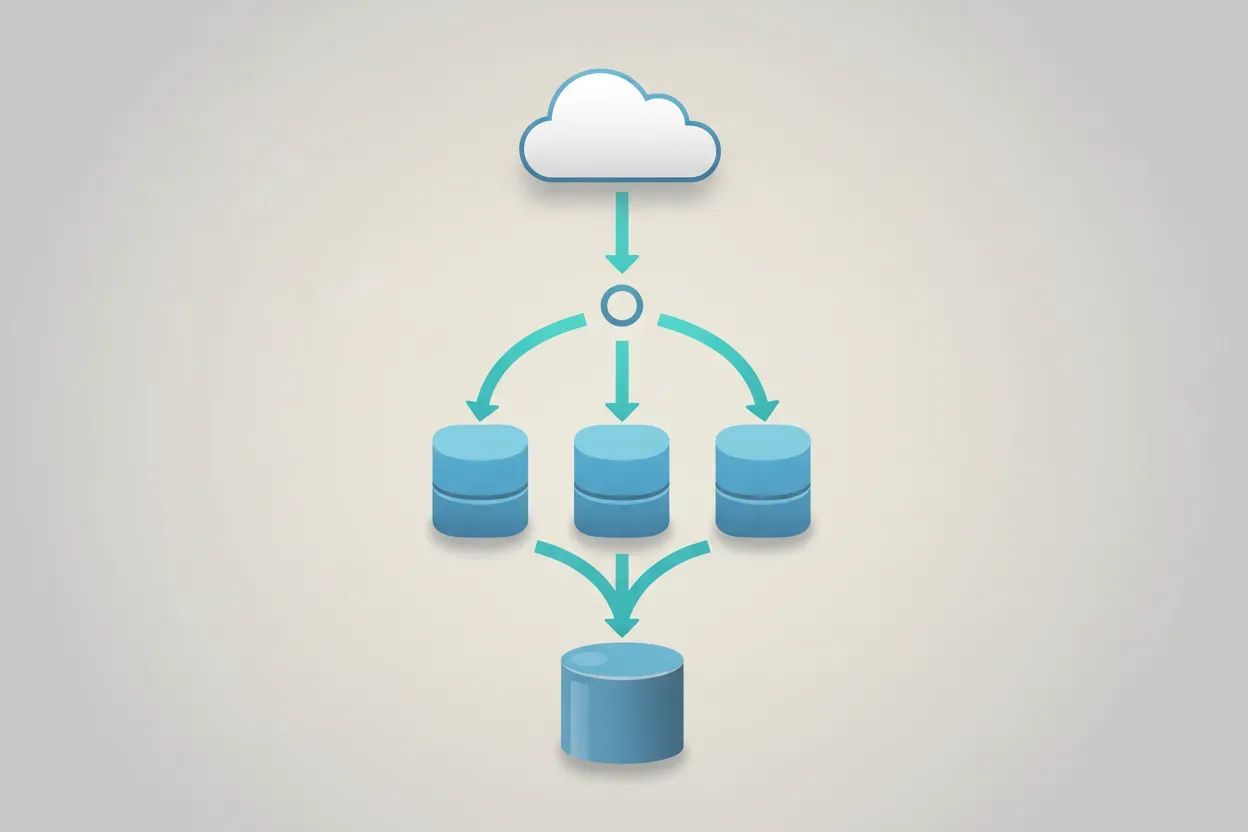
Over my last ten years building AI products, and now as CTO at AGO here in Paris, my go-to serverless design pattern is the asynchronous event-driven worker—specifically, fanning out tasks through message queues. Building autonomous customer support agents means relying on LLM inference, which is inherently slow compared to traditional software. Tying heavy AI calls to synchronous requests usually just leads to timeouts and fragile infrastructure.
We implemented this fan-out pattern for our LLM-as-a-judge simulation pipeline. Since our support agents take real actions like processing refunds, we have to thoroughly test their dialogue paths to catch hallucinations. Before, testing meant engineers manually reading multi-intent transcripts. When we automated this, we didn't want the heavy simulation workloads dragging down the core application. Now, whenever we push an update, it triggers a serverless fan-out event. That spins up hundreds of independent, asynchronous workers in the background, each running a simulated conversational trajectory in a sandbox environment. Decoupling this process let us shrink a review phase that used to take hours of manual effort down to just minutes, all without impacting the performance of our live systems.
Evgeny LeonovChief Technology OfficerRonas IT | Software Development CompanyRoute Secondary Effects to Outbox Events
My favorite serverless pattern for background work is a transactional outbox feeding queue-triggered functions. The application writes the business change and the event record in the same database transaction. A small publisher moves pending events to a queue. Separate functions handle email, webhooks, search indexing, notifications, billing sync, or any other side effect.
A checkout, booking, or profile update should commit the core state first. After that, each background handler can retry, fail, or scale on its own. The user-facing endpoint doesn't need to wait for several external services to answer before returning a result.
In a marketplace-style architecture, one action often triggers slow secondary work: confirmation emails, vendor notifications, analytics events, and updates to a searchable catalog. If too much of that work lives inside request handlers, the code becomes hard to read because a simple business action carries transport logic, retry rules, and provider-specific error handling in the same place. One failing integration can also make an otherwise valid user action feel unreliable.
Moving those side effects behind outbox events and queue consumers makes the request path smaller and easier to reason about. The application saves the order or profile change, records facts like order.created or profile.updated, and returns control to the user. Functions process each event independently. If the email provider has a bad minute, the email job retries without blocking the order. If search indexing needs a new field, the indexing consumer changes without touching checkout logic.
The maintainability gain is the main reason I keep choosing it. You can add a new background process by subscribing to an existing event instead of editing the critical transaction path. You also get better operational visibility because every event has a status, retry count, and handler owner.
I use this pattern when a user action creates multiple side effects and at least one depends on an external system. Keep the transaction small, publish facts as events, and make each function responsible for one job.