Article[2026-11-09]
AI assistants cited our pages thousands of times, but few visits were traceable

During the period of Oct. 9 to Nov. 4, 2026, we received 2,161 citations across our pages from the artificial intelligence (AI) systems tracked by Microsoft's Bing Webmaster Tools. Bing reported 15 clicks to our site from search and chat during this time. These are very different metrics and cannot be interpreted as a rate of citations to visits. The 15 clicks include regular search results, and the AI Performance report does not include any data about clicks. We cannot say how many of the 15 clicks were from AI.
Other research has measured a related effect. A July 2025 study by Pew Research Center looked at how 900 U.S. adults used their browsers in March 2025. If the results included an AI summary from Google, only 8% of visits resulted in a click to a traditional result, compared to 15% where there was no summary. If there was a summary, only 1% of visits resulted in a click to a link in the summary. We can show how often our pages were requested by bots and cited and how few visits we could attribute to AI assistants.
Not all pages were visited
Some AI assistants will crawl the web using bots, like a search engine. Others, such as ChatGPT-User and Claude-User will download a page when requested by the user. Each question can result in multiple downloads. Under our free plan, we use Cloudflare's AI Crawl Control, which identifies bots by their user agent strings.
Between Oct. 9 and Nov. 4, 2026, we received 17,770 requests from OpenAI's bots. Of these, 2,970 were from ChatGPT-User. Over the same period, our web analytics showed 34 visitors from ChatGPT. This means that for every visitor we could attribute to ChatGPT there were approximately 87 requests from ChatGPT-User. This is not a rate of questions to visits.
Anthropic's bots made 13,730 requests during the same period. We had no visitors we could attribute to Claude. In July 2025, Cloudflare analyzed Claude's traffic and found that for every HyperText Markup Language (HTML) page referral there were approximately 70,900 HTML page requests in one week of June 2025. They also noted that the Claude app does not provide any referral information so this number may be inflated. Any visits may have been recorded under the "direct" section of an analytics tool. The numbers we have are not directly comparable as we are comparing bot requests to visitors, whereas Cloudflare is comparing HTML page requests to HTML page referrals. However, they do follow the same trend.
Perplexity's bots made 3,270 requests. We had no visitors we could attribute to Perplexity. We had 21 visitors from Google in our analytics, which were classified as organic search. We cannot say how many of these came from an AI feature.
Different pages were cited
We noticed a difference between the pages most frequently cited in Bing's report and the landing pages of the ChatGPT visitors we could trace. Sixty-six percent of the 2,161 citations we received from Bing were from our three educational guides (intrinsic value, discounted cash flow, and price to earnings ratio). Bing's Citation Share report shows that we received 61% of all the citations Bing displayed for the query "dcf model formula" and 47% on the query "Talval."
Over the same period, we had 34 visitors from ChatGPT. Only one of these landed on an educational page. More than half of these visitors (20) landed on a page tracking the performance of sectors using current market data. Most of the remaining visitors (12) landed on pages based on recent institutional holdings filings. Our hypothesis, based on the data from just one site and two platforms, is that people click through to get information that changes daily and cannot be included in a chat. There may be little reason to click through to a formula that has already been detailed. We have not tested this.
Quick increase in citations
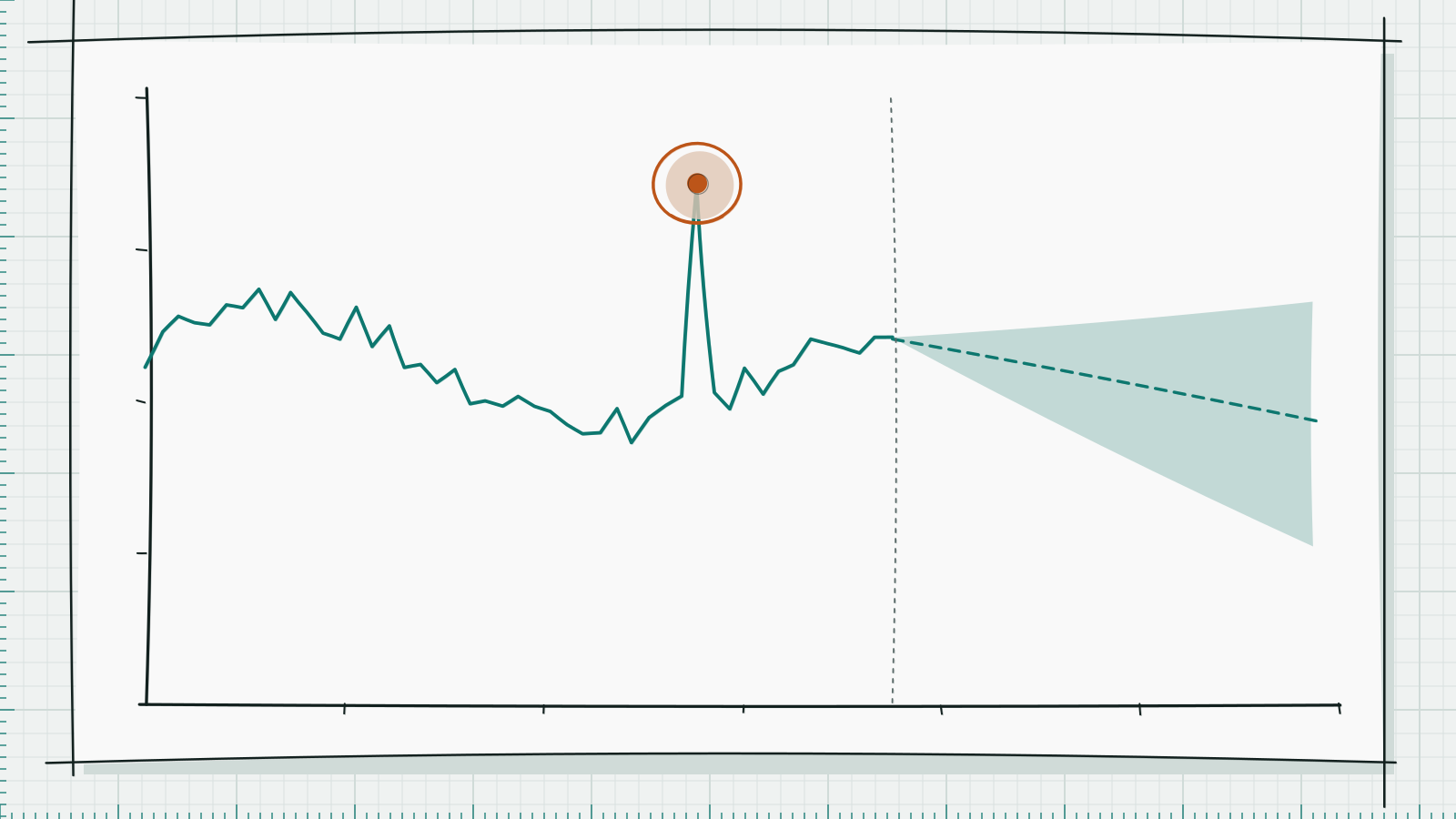
Between Aug. 18 and Sept. 28, we had 886 citations from Bing. This averages to 21 citations per day. Between Oct. 9 and Nov. 4, we had an average of 80 citations per day. This is roughly four times as many.
Not all AI traffic results in a visit
Out of the 8,060 requests we received from Claude-User between Oct. 9 and Nov. 4, 7,210 (89%) did not request a web page. They requested our endpoint for Model Context Protocol. This is an open standard allowing AI assistants to make calls to external tools during a chat. We don't know how many of these were genuine questions and how many were setup calls. Either way, they are just requests and would not show up in our web analytics.
Confusion with tools
The main issue is that our tools don't measure the same things. Microsoft added the AI Performance report in February 2026. This report gives us five metrics, all related to citations. There is no reference to clicks or traffic in the announcement. The search report from Bing doesn't distinguish between web and chat so we cannot see how many of the clicks were from Copilot. A sample of the Ahrefs index of AI answers (checked on Nov. 3) showed that we had 21 citations: 11 from Copilot and 10 from ChatGPT. There were no citations from Google's AI Overviews, Gemini, Perplexity or Grok in that sample. We also made a couple of mistakes.
We almost wrote a headline saying we had 886 citations from Copilot and seven visitors. The 886 citations were from the AI report for Aug. 18 to Sept. 28. The seven visitors were clicks from classic Bing search for a different period. We also ran some tests on our site in September using requests with AI bot names. All of these were blocked. We almost came to the conclusion that we couldn't be seen by AI assistants. In reality, our requests had been blocked by Cloudflare's bot protection. As we were using AI bot names in our requests but they were not coming from the servers of those companies, they were seen as fake. Real bots were still getting through. Between Oct. 9 and Nov. 4, Cloudflare's report shows that 508 megabytes of data were transferred to OpenAI's bots.
What we would look at first
We found a few best practices to help us understand our AI traffic. Compare the same dates across all tools. If you cannot, mention this. Distinguish between live bots (those that download pages when requested) and crawling bots. User-initiated bots can indicate that someone is asking a question. Each question can result in multiple downloads. Treat any AI visitors you can attribute as a minimum. Many apps will not show where they are coming from so their visits may show up as direct traffic. Look at your citation reports by query to see which pages are answering questions on their own. Finally, ensure you know what each report is actually measuring before comparing two numbers.
How we measured
Requests from bots can be found in Cloudflare's AI Crawl Control report (Oct. 9 to Nov. 4, 2026). We downloaded them as daily CSV files from the Metrics tab on Nov. 7, 2026. Our free plan let us select up to 30 days, even though Cloudflare's documentation says the Metrics tab shows 24 hours on free plans. These numbers are estimates from sampled data, so each daily value is a multiple of 10. Under our free plan, bots are identified by their user agent strings. Visitors can be found in Ahrefs Web Analytics (cookieless tool). We had 34 visitors from Oct. 9 to Nov. 4, 2026. We had a breakdown of landing pages for the same dates. Citations and Citation Share can be found in the AI Performance report from Bing Webmaster Tools. This was for Oct. 9 to Nov. 4, 2026. We downloaded the daily citations, queries and cited pages as CSV files and the clicks from Bing's search report for the same dates. Bing states that this is a sample of the data and there is a day or two delay. This is just one young and small site with low search traffic, so it shouldn't be considered typical. We also cannot attribute traffic from AI apps that don't show where they are coming from, so our visitor numbers are a minimum.
Disclosure: We pay for an Ahrefs subscription. We pay Anthropic for application programming interface (API) access, as part of our site uses Claude models. We have run Google Ads campaigns in 2026. We use the free versions of Cloudflare and Bing Webmaster Tools. We have no commercial relationship with OpenAI or Perplexity.
This article was first published on Featured News.